Saturday, August 17, 2019

How to calculate your CGPA

WHAT IS CGPA?


CGPA is defined as Cumulative Grade Points Average. CGPA is the measurement of average grade points obtained by a student in all the semesters. This system wants to know the abilities of student in universities.Many colleges have a cut off  CGPA for admission into different courses. This means that a student must consistently obtain high CGPA.


HOW TO CALCULATE?


This is how we have to calculate our CGPA.


Sunday, August 11, 2019

Plagiarism

WHAT IS PLAGIARISM?

  • Copy idea or words from another and make as one's own
  • Steal idea 
  • to commit literary theft
  • to present as new original an idea or product derived from an existing source 


How to Avoid Plagiarism 

  • paraphrase
  • keep track of your sources
  • Use an online checker or application on phone
  • Quoting
  • Referencing
  • cite

Taking Lecture Notes

TAKING LECTURE NOTES

WHY TAKE LECTURE NOTES
  • Promotes active listening
  • A permanent record will help you to learn and remember later
  • Provides an opportunity for repetition, condense and organize information
  • Provides an opportunity for repetition of the material
  • Lecture is where you learn what your instructor thinks is important, and he makes up the exams
TAKING NOTES IN CLASS

    before class start:
  • Make some preparation so that you will be more to predict what comes out
  • Complete reading  or reference assignments
  • Review back notes given
    during the lecture
  • Be ready with your own pen, books or papers
  • Write down the title of the lecture, the name of the course and the date
  • Pay attention when lecturer speak in front of class
  • Watch the speaker caarefully
  • At the end lecture, if you dont understand any question please ask. Don't be afraid to ask.
     after the lecture
  • Look back your notes as quickly as possible because after that you will still remember a good deal of the lecture
  • Review your notes at least once or twice in a week


EFFECTIVE NOTE TAKING SYSTEM

THE CORNELL NOTE TAKING SYSTEM


Cornell note-taking by me during the lecture at Dewan Anggerik by Madam Dr Najdah.

The Cornell method of taking notes was developed by Dr. Walter Pauk of Cornell University. Using the Cornell system may help organize your notes, actively involve you in the creation of knowledge, improve your study skills, and lead to academic success. 

So here is my activity during the lecture about taking notes.


Sunday, August 4, 2019

Memory, Learning & Improving Concentration


MEMORY AND LEARNING


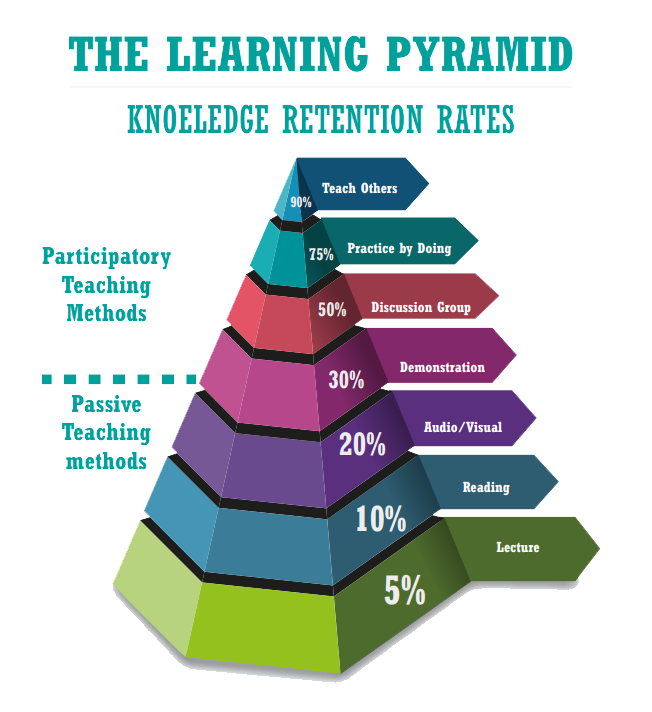
There are various methods a learner can engage in which will allow them to learn information at various percentages of retention. The learning pyramid, researched and created by the National Training Laboratories in betel, Maine, illustrates the percentage of learner recall that is associated with various approaches.

The learning pyramid demonstrates that the best methods for learning retention are at the Base of thee Pyramid. Therefore, it is best to design lessons and activities with this information in mind to make sure the learners are actively engaged in the learning process. This is achieved through discussion groups, practice activities, collaboration and teaching others.


MEMORY PROCESSES


WHAT IS MEMORY?

Memory is our ability to encode, store, retain and subsequently recall information and past experiences in the human brain. It can be thought of in general terms as the use of past experience to affect or influence current behaviour.

Memory is the sum total of what we remember, and gives us the capability to learn and adapt from previous experiences as well as to build relationships. It is the ability to remember past experiences, and the power or process of recalling to mind previously learned facts, experiences, impressions, skills and habits. It is the store of things learned and retained from our activity or experience, as evidenced by modification of structure or behaviour, or by recall and recognition.

WHAT IS BRAIN?

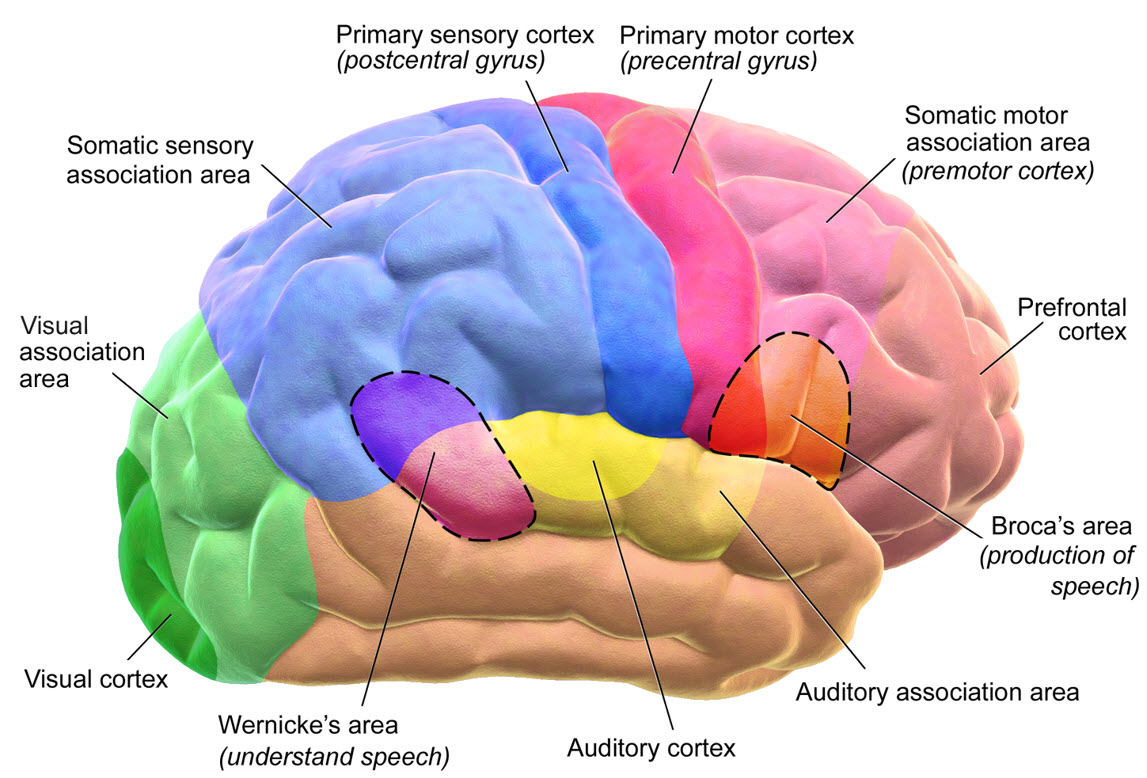
The brain is the organ such as computer hardware. Intelligence, creativity, emotion, and memory are a few of the many things governed by the brain. Protected within the skull, the brain is composed of the cerebrum, cerebellum, and brainstem. The brain receives information through our five senses: sight, smell, touch, taste, and hearing - often many at one time. The analogy is like a computer.


THE STORAGE (RETAIN INFORMATION)

  • Three different types of memory


Sensory Memory
  • Purpose:- holds sensory information
  • Duration:- last up to 1-2 sec for visual; 2-4 secfor auditory
  • Capacity:- large
  • *Information not transferred is lost
Short-term Memory (STM)
  • Purpose:- hold perceptions for analysis
  • Duration:- up to 30 sec without rehearsel
  • Capacity:- limited 5-9 items
  • *Information not transferred is lost
Long-term Memory (LTM)
  • Puporse:- relatively permanent storage
  • Duration:- relatively permanent
  • Capacity:- unlimited

MEMORY STRATEGIES

Memory stratergies will help students in their encoding, storing, and retrieving the information (help to remember and recall).


HOW TO IMPROVE YOUR MEMORY.

WRITE IT DOWN
  • Write an appointment on calendar
  • Write notes in your phone
  • Write in a daily planner
  • Make checklists
ASSOCIATION
  • Relate new information to something you already know well. For example, if you meet someone named Sandra, think of someone you already know named Sandra.
REPETITION
  • Reading, writing, or saying information over amd over can help move information to long-term memory. Put the information to a tune that you can sing on repeat.
VISUALIZATION
  • Picture new information in your mind in a fun or memorable way. Sometimes, just visuallizing helps.Or you can create a silly image or clip in your head that incorporates all the information you must remember.
CATEGORIZATION
  • Group related items together. For example, if you are going grocery shopping, you can think of bananas, apples and pears as "3 fruits" and chicken and beef as "2 meats"

TALK IT OUT

  • Saying it out loud to someone can help you remember
  • Making a joke or having an interesting conversation will trigger memory later
  • Ask a friend or family member to remind you
CUES
  • Use visual cues such as stickers or posts-its
  • Use auditory cues such as a phone alarm
SET LOCATIONS
  • Establish locations for common items and always place those items there. Make the location logical, such as keys by the door. That way, you know that they will always be there an don't have to rely on your memory.
ROUTINE
  • Having a routine makes you less reliant on your memory. Morning and evening routines are the most obvious ideas, but you can also have a routine for tasks at work or grocery shopping.


HOW FORGETTING COULD OCCUR

Everyone forgets things like a person's name, where they left their keys, the ending to a movie, or how to do maths problems. However, the reason why we forget something may differ. Have you ever felt like a piece of information has just disappeared from memory? Or have you had situations where you have no memory of a certain event? Or maybe, you know certain pieces of information exist in your mind, but you just cannot seem to retrieve it.


THE MAIN REASONS FOR FORGETTING INCLUDE:
  1. Retrieval failure
  2. Interference
  3. Decay or fading
  4. Motivated forgetting
  5. Did not pay attention to information
  6. Did not understand the information
  7. Cramming (last minute study)
  8. Did not have good stratergies


STRATEGIES TO IMPROVING CONCENTRATION

  • What is concentration vs breaking concentration?
  • CONCENTRATION-  Focusing your attention on what you are doing.

CAUSES OF POOR CONCENTRATION
  1. Lack of attention
  2. Lack of interest
  3. Lack of motivation
  4. Distraction from others
  5. Uncomfortable environment
  6. Physiological matters -illness, tiredness
  7. Physiological matters - personal problems, worries, anxieties


USE

  • Use motivational and organizational stratergie - create intrest the work, develop a positive attitude toward you work, use goal setting stratergies, use time-management stratergies
CREATE
  • Create a positive learning environment - find a better location, reduce multiaskong, minimize distractions
DEAL
  • Use active learning stratergies (as discussed in improving memory)
MATCH
  • Match your learning style to the task
MONITOR
  • Monitor your concentration


READING/STUDY SYSTEM (SQ3R)

The SQ3R study system is an organized approach to your textbook learning. Students who use a study system read with greater comprehension and remember more over a period of time. What are the components of the SQ3R system?


The essential rules are condensed into the following formula involving the five specific steps of the study system:

SURVEY: Read quickly to get the gist
QUESTION: Write question would you like to find answers for
READ: Read once without taking notes to find answers to your question. Read again to make notes.
RECALL: Make outlines of what you remember
REVIEW: Answer your questions from your notes and review them periodically.

Friday, August 2, 2019

TIME MANAGEMENT


TIME MANAGEMENT


What is time management? 

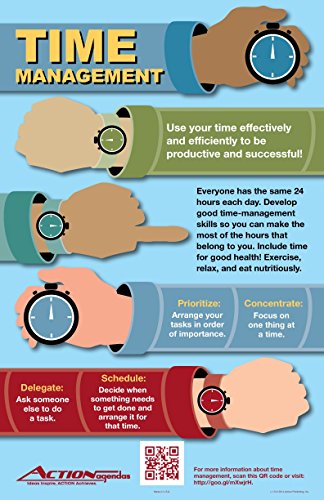
Time management is the way we manage our time so that we can achieve our goals,especially as a student our goal is want to get a higher pointer in every semester


IMPORTANCE OF TIME MANAGEMENT

Time management is important for our personal life and career success. It teaches us how to manage our time effectively and make the most of it especially for students who wants achieve their dreams.
Here are a few of the reasons why it is so important, and how it can help us use and manage our time more advantageously:
  • Avoid increasing work
  • Our work will be more organized
  • Can do many thing with a time well
  • Achieving our goal
  • Have enssential life skill
  • Increasing energy
  • Reduction stress
FIXED-COMMITMENT CALENDAR


So here is my fixed-commitment calendar. So that I can manage my time very well also it helps me to do any activities that I have already planned between study time and my daily time.

Strategies to stay motivated using time management

  • Reward something for ourself after doing a hard task
  • Determine deadline
  • Finish a unpleasant task first
  • Play some your favourite music
What is procrastination?

Procrastination is the avoidance of doing a task that needs to be accomplished by a certain deadline. It could be further stated as a habitual or intentional delay of starting or finishing a task despite knowing it might have negative consequences.

6 causes of procrastination
  • Fear of the unknown
  • Perfectionism
  • I'll do it later
  • Working on small tasks because they're easier
  • Your experience lack of motivation
  • You often get distracted
4 ways to reduce your procrastination

  • Make yourself do the first one-second task.
  •  If you get stuck, struggle for only one minute. 
  • Remember that if you don’t try, you guarantee failure
  • Try a to-do-list app


    GETTING TO KNOW THE CAMPUS


    This is our library called Perpustakaan Cendekiawan. This library provide excellent service to all students. Perpustakaan Cendekiawan serves as one of the:-


    • Supporting learning, teaching and research of UiTM Cawangan Terengganu to educate native became professional and professional.
    • Collecting a variety of materials related to the programs offered.
    • Providing facilities/services so that these materials can be used as a maximum by all users.
    • Strive to create a campus community has read.


    • So here student can have a research and refer any book in library for their studies. More than that, at Perpustakaan Cendekiawan they also have 2 levels. Levels one placed all the types of books while levels two placed all the journals. The most important we must to know, students can borrow maximum twenty books. 


      Monday, July 29, 2019

      GOAL SETTING

      GOAL SETTING


      What is goal?
      • It's something you would like to achive what you want in your life.
      What is the purpose of setting goals?
      • Goals give you direction and keep you focused on where you want to end up.
      What is goal setting?
      • Goal setting is a process for thinking about your ideal future and for motivating yourself to turn this visiom of the future into reality.
      • The process of goal setting will helps you where you want to go in life.
      • Properly set goals can be incredibly motivating and as you get into the habit of setting and achieving goals, you will find yourself confidence build fast.


      CHARACTERISTIC OF GOALS.


    • Specific Your goal has to be specific such as next year must be better than this year,want a great grades in exam or want to be a great student college.
    • Measurable – The goal has to be measurable. You have to be able to measure your progress with accessible numbers that are directly indicative and meaningful to your pursuit.
    • Attainable – The goal must be realistic based on resources.
    • Realistic- The goal based on your ability,needs or interest.
    • Time bound- The goal must have deadline.
      • ACADEMIC AND PERSONAL GOALS

        Academic goals is something relates with our works.Such as a student we have to complete our assignment and preparing for the exam.

        Personal goals is something that relate with our daily life and our dream.

        5 TIPS TO GET THE RIGHT START THIS SEMESTER
        1. Always take note in the classes
        2. Always completing all assignments given
        3. Do more exercise before examination started
        4. Manage the time very well
        5. Always focused in the classes
        MY GOAL GETTER


        GETTING READY TO LEARN


        HIGH SCHOOL VS UNIVERSITY.


        Not an easy task when you are making the moves from being in school to umiversity. At the new places students need to make new friends amd there are also many new stuff students need to know and to suit with university life.

        8 STEP STUDENT TO SUCCESS.

        • STUDY SMART
        • ALWAYS ATTEND THE CLASS
        • STUDY GROUP
        • WORK HARD
        • COMMUNICATION SKILLS
        • ALWAYS SIT IN FRONT OF LECTURER
        • GET HIGHER POINTER EVERY SEMESTER
        • GOOD TIME MANAGEMENT


        USING LEARNING STYLES TO ENHANCE PERFORMANCE


        There's a lots of study method that we can use to accomplish our study with a high excellent grade. so here is i will give you some methods to be a great student in university.


        VISUAL:

        • Students that understand and learn best when information is presented to them visually. Seeing information helps these students visualize concepts taught.
        • Want the lecturer to provide demonstrations
        • Often use lists to keep up and organize thoughts
        • Have well-developed imaginations
        AUDITORY:
        • Want verbal instructions
        • Enjoy dialogues,discussions, and plays to explore concepts
        • Listen and repeat to recall information
        KINESTHETIC:
        • Think and learn the best while moving
        • Prefer to do rather than watch or listen
        • Do best when they can manipulate actual objects during learning

        MY LEARNING STYLE INVENTORY


        Based o my result, Im a visual learner. So that I need to know how to study based on my visual learning.